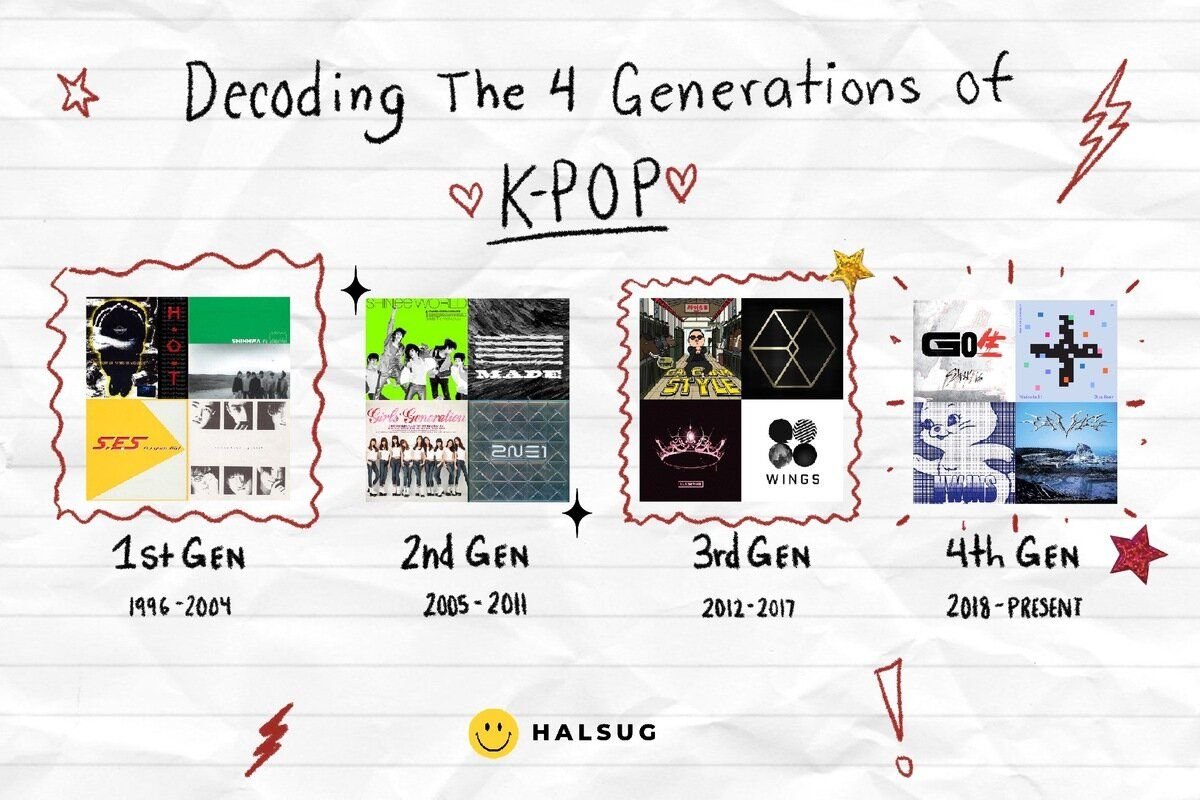
K-pop isn't just music; it's a global cultural phenomenon, constantly evolving and redefining itself. To truly grasp its incredible journey from a niche Korean sound to a worldwide sensation, we need to talk about kpop generations. These informal yet powerful eras act as a roadmap, helping us understand the seismic shifts in sound, style, technology, and global reach that have shaped the industry over nearly three decades.
This deep dive isn't about rigid timelines, but about recognizing the distinct waves of innovation that have captivated millions. From the trailblazing pioneers of the 90s to today's tech-savvy global artists, each generation builds upon the last, adding new layers to K-pop's intricate tapestry. Join us as we explore the defining moments and artists that have cemented K-pop's status as a formidable force in entertainment.
Understanding the K-pop Timeline: More Than Just Years
The concept of kpop generations isn't an official decree from an industry board; it's a dynamic framework crafted by fans and industry watchers alike. These eras are fluid, marked by major debut years, dominant trends, and distinct resets in music, visuals, and overall concepts. Think of them less as hard cutoffs and more as overlapping cultural shifts that provide crucial context to the genre's growth.
Recognizing these generations is vital for understanding why certain sounds captivated audiences, how technology repeatedly revolutionized distribution, and the incredible shift from a local Korean focus to undeniable global dominance. It also helps us appreciate the groundbreaking concepts that continue to inspire and innovate. For a deeper dive into the specific characteristics and criteria that define these eras, we recommend you explore Defining K-pop Generations & Criteria.
The Foundation: Building the Idol System (1st & 2nd Generations)
The story of K-pop begins with visionaries who laid the groundwork for the modern idol system. The 1st Generation K-pop (roughly 1990s – 2004) established the very blueprint, blending Western music influences with Korean lyrics and introducing synchronized choreography. Groups like Seo Taiji and The Boys pioneered the way, followed by H.O.T., who essentially invented the contemporary idol concept with their coordinated visuals and powerful performances. Girl groups like S.E.S. proved their immense appeal, while Shinhwa set a precedent for longevity. This era sparked the initial "Hallyu" wave, gaining significant traction across East Asia. Their fashion often mirrored American pop, with baggy jeans and simple makeup, emphasizing an approachable, natural style.
Moving into the 2nd Generation K-pop (2005 – 2011), the genre exploded onto the international scene, largely fueled by the burgeoning power of YouTube and social media. This period transformed K-pop into a profitable, crucial industry within South Korea, marked by advanced marketing strategies and entrepreneurial flair. Girls’ Generation’s "Gee" became a global sensation, while BIGBANG pushed experimental hip-hop and electronic boundaries. Iconic choreography, global tours, and the rise of vibrant fan culture, complete with lightsticks, became synonymous with this era. Fashion evolved from approachable to experimental, featuring dramatic hairstyles, hip-hop influences, and eventually more unconventional, futuristic looks with bold colors and metallics. To truly appreciate how these foundational eras shaped the industry, immerse yourself in The Genesis: 1st & 2nd.
Global Dominance: The Mainstream Breakthrough (3rd & 4th Generations)
The 3rd Generation K-pop (2012 – 2017) marked K-pop's ascent as a true global phenomenon, breaking into Billboard charts and earning mainstream Western recognition. BTS famously redefined the genre with their profound storytelling, social commentary, and undeniably catchy music, paving the way for countless other K-pop acts worldwide. BLACKPINK popularized the fierce "girl crush" concept, while EXO perfected a polished sound with powerful vocals and intricate choreography. This era saw a heavy emphasis on globalization, driving K-pop into international music festivals, award shows, and lucrative brand endorsements. Fashion became integral to storytelling, with diverse concepts ranging from urban hip-hop to elegant formal wear, and even throwback styles from previous decades.
The 4th Generation K-pop (2018 – 2023) continued this trajectory with an even greater emphasis on performance, genre-blending, and social media virality. Idols became more artistically independent, with groups like Stray Kids pioneering self-producing, while ATEEZ brought theatrical, cinematic qualities to their sound. ITZY's empowering "not like other girls" messages resonated widely, and TXT captured the dreamy essence of modern youth. TikTok emerged as a critical platform for trends, and agencies started to integrate AI and NFTs into the K-pop world. Despite the pandemic, this generation achieved unprecedented success, breaking sales records and dominating international charts. Fashion aligned with global Western trends, featuring daring, theatrical looks with luxury brand pieces taking center stage, often showcasing individual member personalities over strict coordination. For a comprehensive look at how K-pop achieved its global breakthrough, dive into Discover K-pops breakthrough generations.
The Horizon: The Emerging 5th Generation and Beyond
We are currently witnessing the dawn of the 5th Generation K-pop (2023 – Present), an exciting new chapter defined by tech-savvy rollouts, hyper-global trainee pools, and sophisticated AI-era marketing strategies. Groups like BABYMONSTER are carrying on powerful performance traditions with sounds that blend nostalgia with futuristic vibes, while TWS offers a refreshing take on youthful concepts. This generation is characterized by its experimental nature, less rigid adherence to traditional concepts, and deeper, more interactive relationships with fans. The emergence of groups like KATSEYE, designed from inception with diverse, global members, signals a new model transcending conventional K-pop boundaries.
This wave is anticipated to redefine the artist-audience relationship and explore entirely new musical and visual territories. Early fashion trends for these groups lean towards cute and baggy styles, but with the rapid pace of K-pop innovation, we can expect a swift evolution in their aesthetic. To stay ahead of the curve and understand the burgeoning trends of this dynamic new era, make sure to Explore K-pops next wave Discover 5th.
Beyond the Music: The Evolving Business of K-pop
Underneath the captivating performances and innovative music lies a sophisticated and ever-evolving industry. Each of the kpop generations has brought significant advancements not just in artistry, but also in business models, marketing strategies, and global outreach. From the early establishment of the rigorous idol training system in the 1st Generation to the strategic use of YouTube in the 2nd, and the data-driven, fan-engagement strategies of the 3rd and 4th, the K-pop industry has continuously adapted and innovated.
Today, we see unprecedented investments in cross-border collaborations, luxury brand endorsements, and the exploration of new technologies like AI and NFTs. This intricate ecosystem, driven by visionary entertainment companies and passionate global fandoms, is a testament to K-pop's comprehensive impact. To truly grasp the financial and structural evolution behind this global phenomenon, we invite you to Explore K-pops evolving industry.
The Future: A Constantly Reinventing Phenomenon
The journey through the kpop generations reveals a genre that is fundamentally dynamic and relentlessly forward-looking. What started as local music has become a hybrid global force, seamlessly integrating advanced technology, diverse talent, and innovative storytelling. As we look ahead, the K-pop landscape will likely feature more personalized fan experiences, increased AI integration in every aspect of production and marketing, and the emergence of entirely new artistic formats, including virtual idols. The constant evolution ensures that K-pop will remain at the forefront of global entertainment, continually surprising and inspiring audiences worldwide.